Khyati Agrawal Gupta
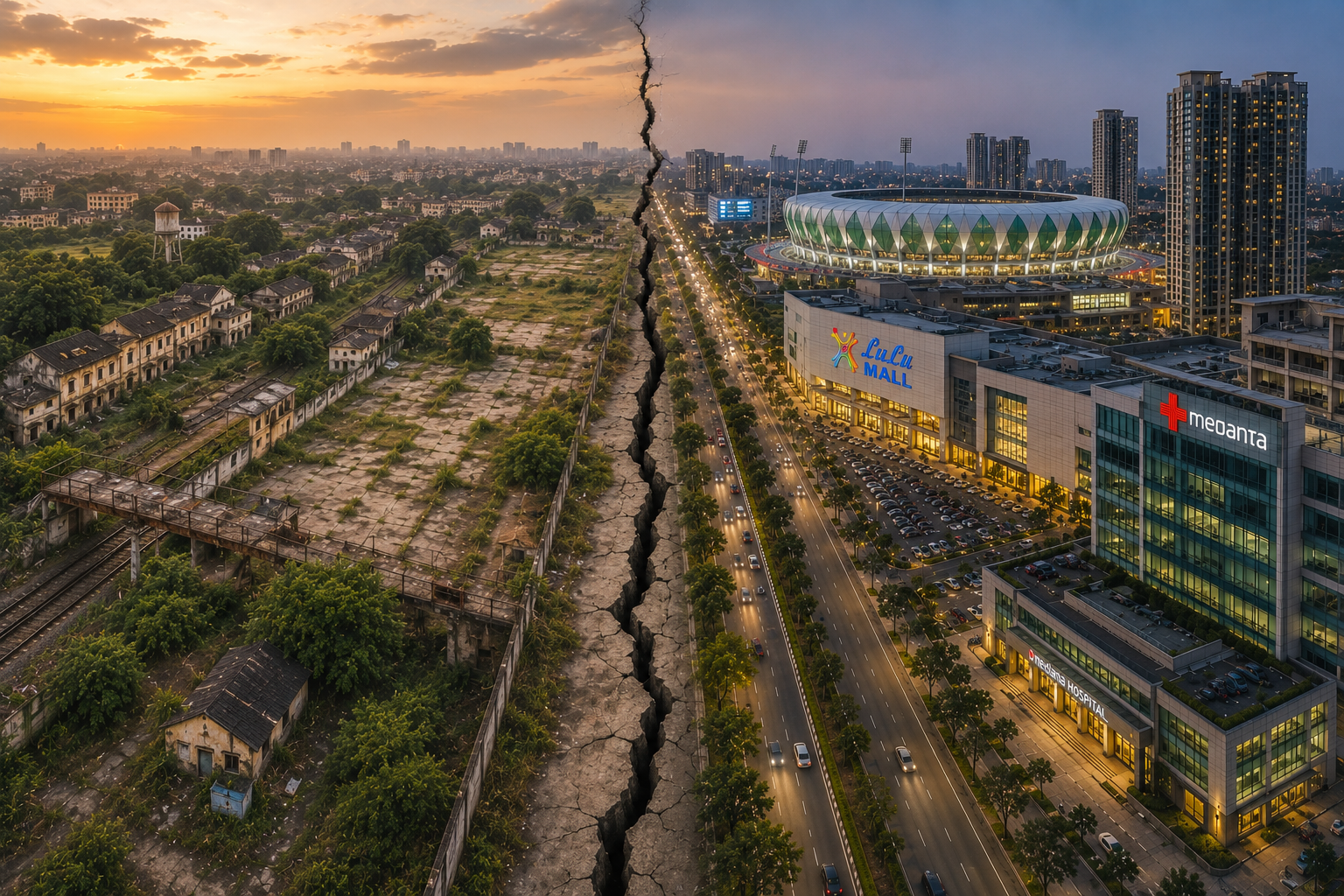
Lucknow: Driving through Lucknow, I find the city’s development strangely reversed: wild, unused land within the city, followed by high-rises, malls & new neighbourhoods towards the outskirts.

What is tying up land inside the city? Lucknow’s central land is fragmented across public institutions. Ministry of Defence data puts Lucknow Cantonment’s defence land at 8,194.65 acres (about 33.17 sq km). A consolidated public figure for Railway land is unavailable, but its footprint spans stations, tracks, yards, colonies & other infrastructure, alongside land held by the state government, LDA, housing authorities & other public agencies.
To understand this, we have to go back about 150 years, to a very different Lucknow. After 1857, the British shifted their military establishment to open, well-drained land around Dilkusha, acquiring 3,000+ acres for barracks, training, accommodation & military movement. In 1867, the first Lucknow–Kanpur railway reached Charbagh, chosen for its open land, road connectivity & proximity to the cantonment.
Those requirements made sense then. But Lucknow has changed dramatically: has its land allocation changed with it?
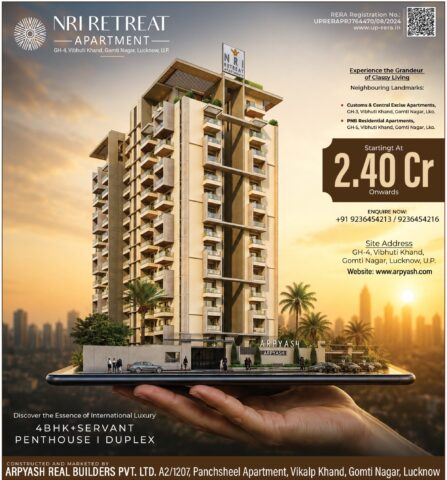
Perhaps the easiest way to see this change is to look at where the new city has been built. Sushant Golf City, Gomti Nagar Extension, Ekana Stadium, Medanta, Amity University, LuLu Mall & Phoenix Palassio have all helped push the city’s centre of gravity towards Shaheed Path, Sultanpur Road & the eastern fringe. What these developments shared was scale: large parcels that could be assembled, planned & developed together. Inside the older city, the land story is much more complicated. Defence, Railways & other government bodies hold parcels for different purposes, alongside fragmented private ownership. The outskirts offer developers a blank canvas; the established city is a jigsaw of land ownership.
Freeing such land, however, is far from simple. Public land is governed by different ownership & statutory frameworks, with no single city-wide inventory identifying what is operationally required, earmarked for future use, under-utilised or available for transfer. Changes can require inter-departmental assessment, approvals, valuation and, for Defence land, security & replacement-land considerations.

Two recent cases show how difficult this process can become: at Nehru Enclave, roughly 200 acres remained in an Army–LDA dispute for nearly two decades, until the two sides moved towards a settlement in 2025. The Green Corridor faced a different hurdle, with nearly 54 acres of Army land requiring multiple approvals & arrangements to address Defence requirements.
Rail Land Development Authority offers a useful example of active public-land management. At Gomti Nagar, it integrated railway infrastructure with surrounding land, creating commercial complexes with 154 shops leased for 60 years alongside the new world-class terminal. Two Vibhuti Khand-side parcels have been leased to GIDCO for commercial complexes & hotels. Phase-1 was inaugurated by PM Narendra Modi in 2024. Charbagh is being approached similarly.
So what should change? The government has already moved towards digital land records, GIS mapping & institutional land-management systems. The next step could be a 5–10 year audit of major Defence, Railway, state & other government holdings, classifying parcels as essential, future-use, under-utilised, disputed or genuinely surplus. A defined mechanism should then enable genuinely surplus land to be transferred, redeveloped or monetised for public purposes through clear timelines, valuation & replacement provisions.
What could this unlock? Housing, hospitals, schools, transport, IT parks & commercial districts- bringing investment & high-value jobs into the existing city rather than continually pushing growth outward.
Lucknow’s centuries-old public-land footprint reflects very different priorities. Today, rising incomes, greater spending power & bigger ambitions are reshaping the city. Perhaps it is time to ask: what should this land do for Lucknow now?